 Advertisement
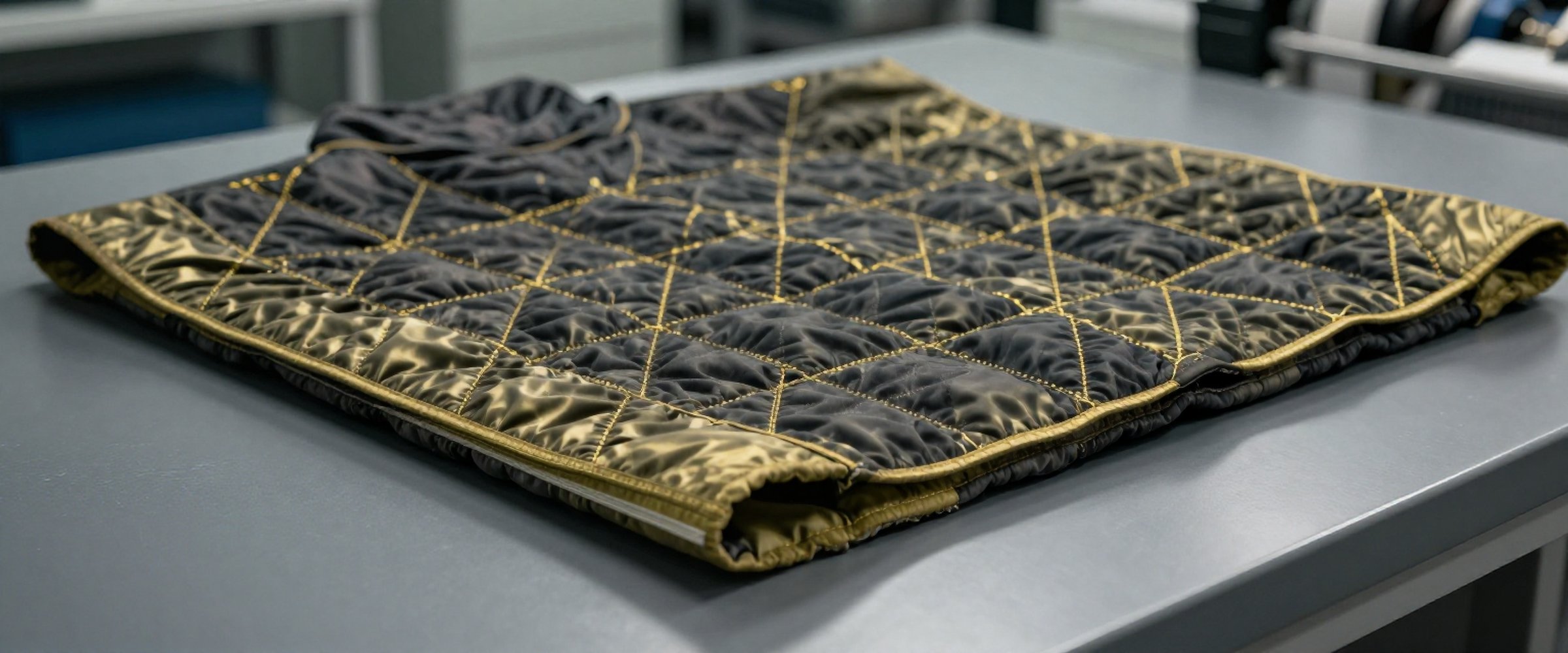
The thermal liner is usually a quilted batting on a face cloth, and it is the layer that decides two things at once: how much insulation stands between your members and the fire, and how much of their own heat they can shed while working. It provides most of the garment’s insulation and most of its bulk and weight.
It is also where the single most consequential specification trade-off in structural PPE is actually made, and where specifying the “safest” number turns out to be the wrong instinct.
TPP and THL
- TPP, Thermal Protective Performance. How much insulation the composite provides against a flash fire exposure. More insulation, higher TPP.
- THL, Total Heat Loss. How readily the composite sheds the firefighter’s own metabolic heat. More breathable, higher THL.
Adding insulation raises TPP and lowers THL. Making the composite more breathable does the reverse. There is no construction that maximizes both, and any supplier presenting a high number for one without the other is showing you half the picture.
Why the highest TPP is not the safe answer
Specifying the highest TPP available sounds cautious. It is not, and the reason is a matter of how firefighters are actually hurt.
Heat stress is a routine cause of firefighter injury and a contributor to cardiac events, which remain a leading cause of on-duty death. It acts on every member, on ordinary calls, cumulatively across a career. The flashover exposure that extra insulation buys a few seconds against is, by comparison, rare. Trading away breathability to raise a number that addresses the rarer hazard, while worsening the one your members meet on every working fire, is a real cost paid for a small and situational gain.
That is not an argument for minimum insulation. It is an argument that the right point on the curve depends on what your department actually does. A department running long incidents in a hot climate is answering a different question from one whose principal risk is interior structural attack in cold weather, and a volunteer department whose members arrive already exerted is answering a third. Which is precisely what a risk assessment is for, and why NFPA 1850 expects one before an ensemble is selected at all.
What the construction actually changes
Liner construction is the lever that moves both numbers, and there are more variables in it than a spec sheet usually shows:
- The number of quilted layers and the batting used in them: the most direct control over insulation, and over bulk.
- The face cloth against the wearer, which affects how the garment feels, how easily it donns over a wet or sweating body, and how it moves.
- Whether the quilting is continuous or broken. Quilting stitches compress the batting where they pass through it, and every compression is a thinner spot in the insulation; how a maker arranges that changes both numbers.
- Trapped air. Much of the insulation is air rather than fiber, which is why a liner that is compressed, matted or saturated protects less than the same liner in good condition.
That last point has a care consequence. A liner is not inert: it can mat, it can lose loft, and a liner that has been repeatedly compressed or improperly dried is not delivering the TPP it was certified at. This is one of the things an advanced inspection is looking for when it opens the garment.
Bulk, weight and the things they cost
The liner carries most of the garment’s bulk, and bulk is not a comfort question alone. It changes how well a member fits through a window or a hoarded doorway, how much the coat and trousers overlap when reaching overhead, how quickly the ensemble can be donned, and how much energy is spent simply moving in it. Those are operational effects, and they belong in the decision alongside the two test numbers.
This page describes liner technology and the trade-offs in general terms. It names no manufacturer and endorses no product. TPP and THL are properties of the certified composite, not of the liner alone, so ask any supplier for the figures for the exact shell, barrier and liner combination you are being quoted, and confirm the edition of NFPA 1970 your authority having jurisdiction has adopted. See what NFPA 1970 requires.
The other two layers
Outer Shell
Takes the flame, the abrasion and the UV, carries the trim, and supplies most of the garment’s strength; fiber, yarn and weave each change it independently.
Moisture Barrier
Keeps water, blood and chemicals out while letting perspiration vapor through, and the layer most easily damaged by heat, folding and bad cleaning.
General information for fire service decision makers, not a specification and not compliance advice. It names no manufacturer and endorses no fabric. NFPA and the standards referenced here are the property of the National Fire Protection Association; FireBrigade.com is not affiliated with, endorsed by, or speaking for NFPA.
 Advertisement