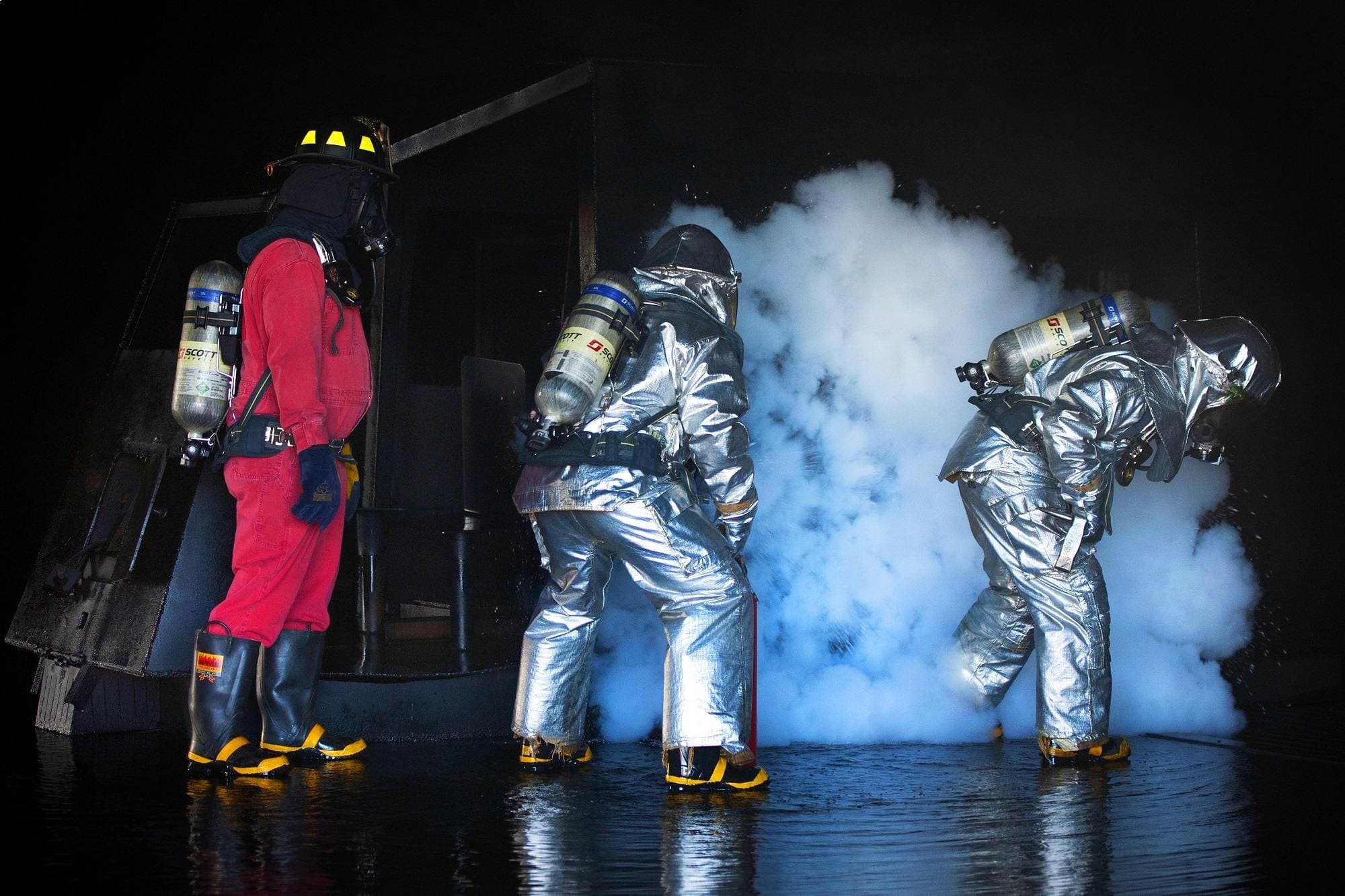
Protective clothing answers the hazards a firefighter meets in the moment. It does not answer the ones that accumulate over a career. Occupational cancer has become one of the defining health issues in the fire service, and it is the reason this section exists alongside the gear.
Firefighting is a carcinogen
In 2022 the International Agency for Research on Cancer, part of the World Health Organization, classified occupational exposure as a firefighter in Group 1, carcinogenic to humans. That is the agency’s highest category, the same one used for asbestos and tobacco smoke.
The exposures behind that finding are the ordinary business of the job: combustion products on the fireground, contamination carried back on gear, and repeated low-level contact over years rather than any single catastrophic event. Cleaning and care of PPE addresses part of it. Early detection addresses another part: what happens if something has already begun.
Precision Epigenomics, The Company
Precision Epigenomics and EPISEEK®
Precision Epigenomics is committed to transforming healthcare with cutting-edge technology that identifies multiple cancer types at their earliest stages through a simple liquid biopsy.
Driven by excellence and compassion, EPISEEK® tests are fast, reliable, and affordable, giving patients the peace of mind they need about their health and future. They are more than just a business: a medically led team devoted to enhancing your well-being.
Multi-cancer early detection
Conventional cancer screening is organized one cancer at a time, and routine programs exist for only a handful of them. Many cancers have no recommended screening test at all, which means they are usually found once they cause symptoms, often later than anyone would want.
Multi-cancer early detection, usually shortened to MCED, takes a different approach: a single blood draw examined for signals associated with many cancer types at once. For an occupational group carrying elevated risk across several sites rather than one, that breadth is the appeal.
How the test works
The Precision Epigenomics liquid biopsy test, EPISEEK, is a groundbreaking multi-cancer early detection (MCED) test that uses a simple blood draw to identify DNA changes associated with over 60 types of cancer. By detecting hypermethylated DNA loci (areas commonly hypermethylated across various cancers), EPISEEK enables early, accurate detection, even in individuals without prior signs of cancer.
Using advanced technology software, epigenomic modifications are analyzed. This technology is cost-effective, precise, and minimally invasive, and it may detect cancer earlier than imaging. It is also more accessible than a tissue biopsy.
Who the test is for
The EPISEEK® test is recommended for use in adults with an elevated risk for cancer, such as those aged 45 or older. The EPISEEK test does not detect all cancers and should be used in addition to routine cancer screening tests recommended by a healthcare provider. EPISEEK is intended to detect cancer signals. Use of EPISEEK is not recommended in individuals who are pregnant, 21 years old or younger, or undergoing active cancer treatment.
Important information about results
Results should be interpreted by a healthcare provider in the context of medical history, clinical signs and symptoms. A test result of Cancer Signal Not Detected does not completely rule out cancer. A test result of Abnormal Methylation Signal Detected requires confirmatory diagnostic evaluation by medically established procedures (i.e. imaging and lab testing) to confirm or exclude the presence of cancer.
If cancer is not confirmed with further testing, it could mean that cancer is not present (i.e. EPISEEK false positive) or confirmatory testing was insufficient to detect a very early cancer (follow up testing false negative). False positive (abnormal methylation signal detected when cancer is not present) and false negative (a cancer signal not detected when cancer is present) test results do occur. Rx only.
This page is general information for fire service decision makers. It is not medical advice and does not establish a clinical relationship.