
 Advertisement
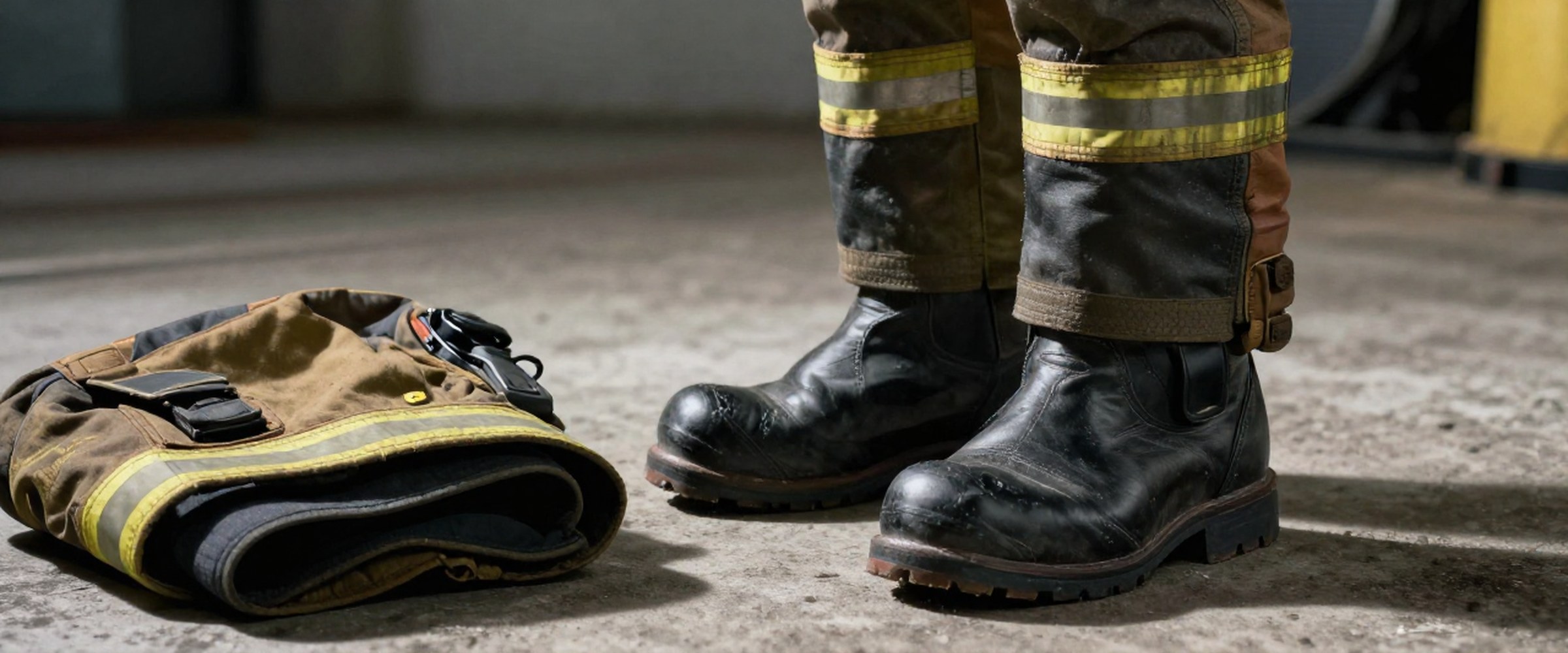
Boots are the element your members stand in for the whole shift, and the one that takes the most mechanical punishment. They carry the weight of a firefighter plus gear on ladder rungs, through debris, and across surfaces that are wet, uneven and hot. They are also the element most often bought on price and habit, which is why the same two complaints follow the order: they do not fit, and the soles let go early.
What a structural boot has to be
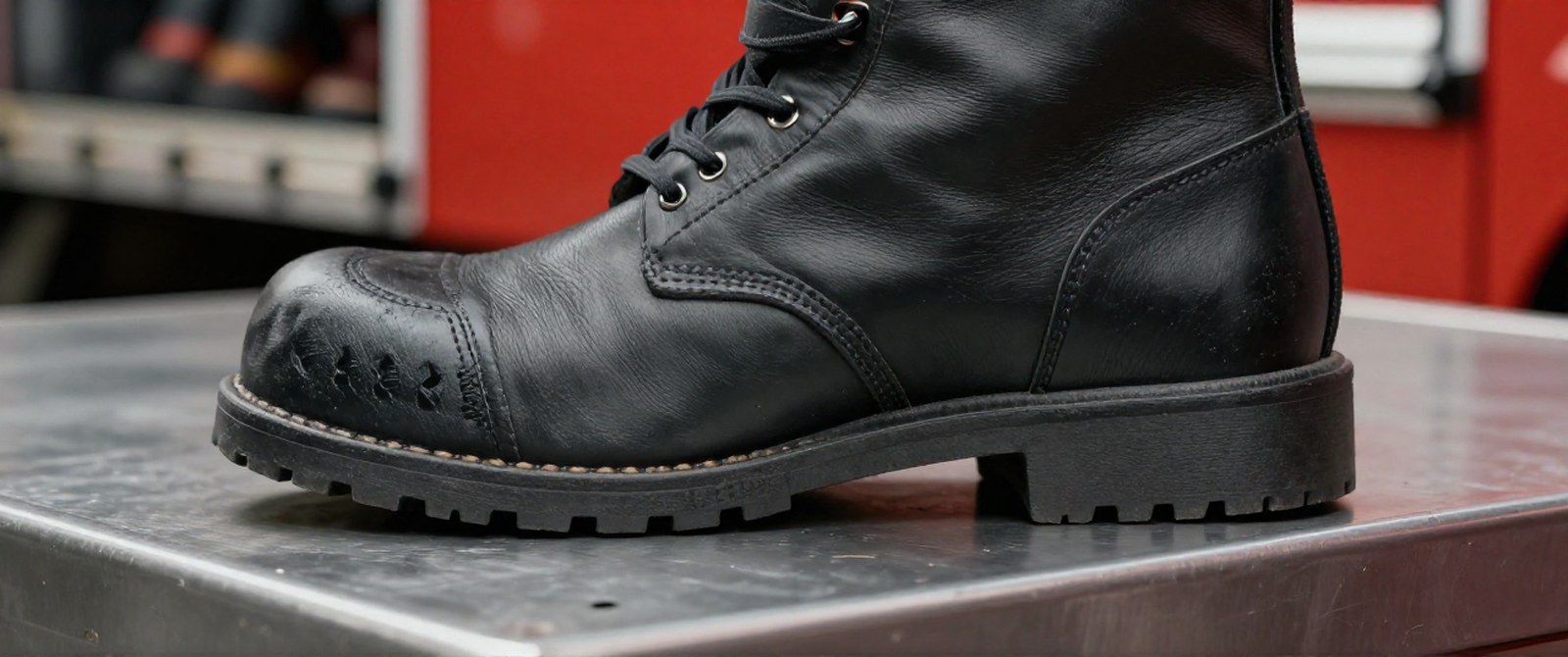
A certified structural boot is an assembly with named parts, not simply a tough boot. It has a sole with a defined heel, an upper with a lining, an insole carrying a puncture-resistant device, and an impact and compression resistant toe cap that is permanently built in rather than dropped in as an insert. The toe cap may be steel or composite. Running through the sole is a ladder shank, a stiffener that keeps the sole from folding across a rung.
Two constructions are in common service, leather and rubber, and both can be certified to the same requirements. The choice between them is about weight, donning speed, how they hold a fit over time and how they age in your climate, not about one being the compliant option.
The requirements, in numbers
Footwear requirements moved into NFPA 1970 when it consolidated the structural ensemble standards. These are the performance figures a certified structural boot is tested against:
- Puncture resistance: the upper has to resist puncture under an applied force of 60 newtons, about 13 pounds.
- Cut resistance: the cut distance in the upper must not exceed 20 millimeters, about 0.8 inch.
- Slip resistance: the outer sole has to reach a coefficient of friction of 0.4 or greater.
- Electrical insulation: current leakage must not exceed three milliamps.
- Liquid penetration: upper materials and seams must keep liquid out for at least one hour.
- Viral penetration: upper materials and seams must resist bacteriophage penetration for at least one hour.
- Flame resistance: no melting, dripping or burn-through, and any after-flame must last less than five seconds.
- Heat and thermal resistance: no melting, separating, ignition or water penetration, and every component has to remain functional afterward.
Read that list as a floor, not a ranking. Every certified boot clears all of it, so none of these numbers tells you which boot to buy. What they do tell you is which claims are already covered by certification and which ones a salesperson is adding on top.
The ladder rung is the design problem
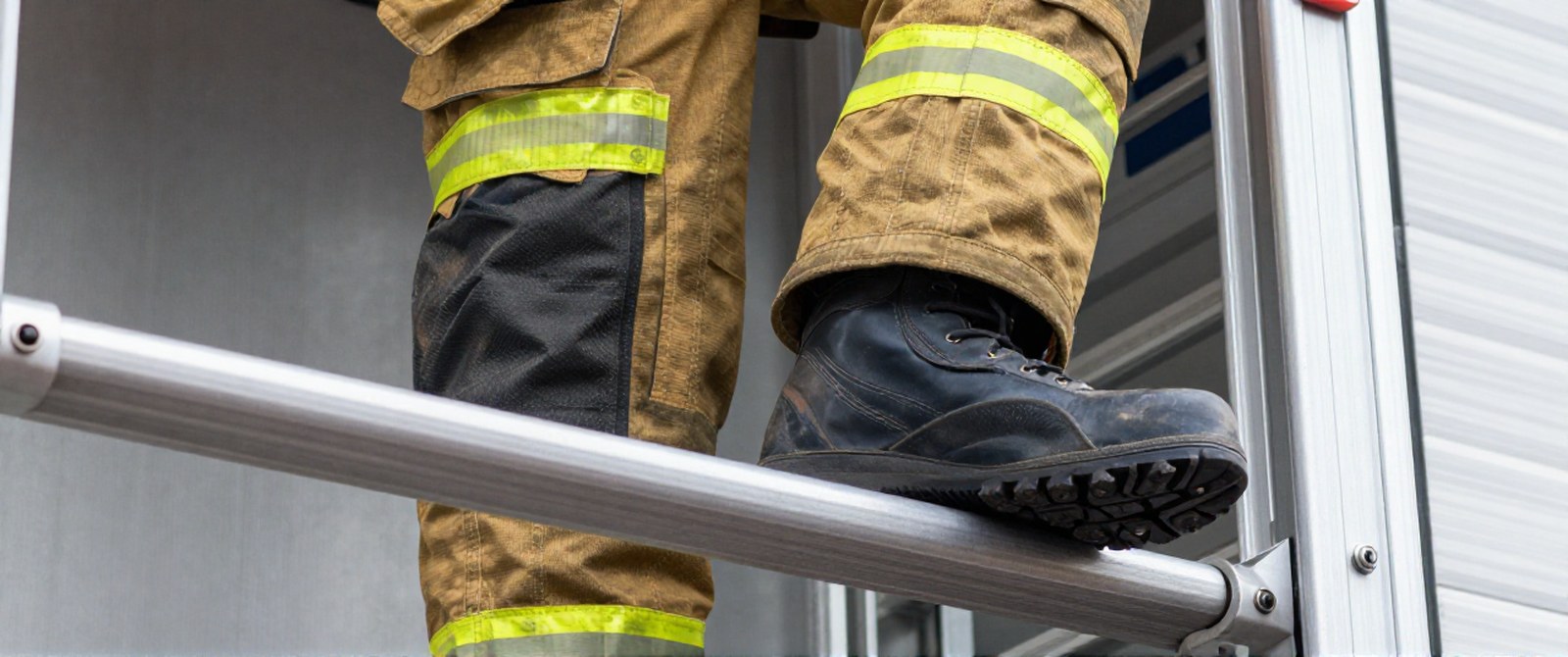
Standing on a rung puts the weight of a fully equipped firefighter onto a bar about an inch wide. Without a shank the sole wraps around it, the foot rolls, and the arch takes the load directly. That is what ladder shank protection is for: it holds the sole flat so a member can work from a ladder for long periods without the boot folding underneath them.
Shanks differ in material, length and how far back they run, and the test limits how far the sole may deflect. It is worth asking any supplier how their shank is built and what deflection their certified model records, because this is the single feature most likely to separate two boots that look identical on a spec sheet.
What is actually underfoot
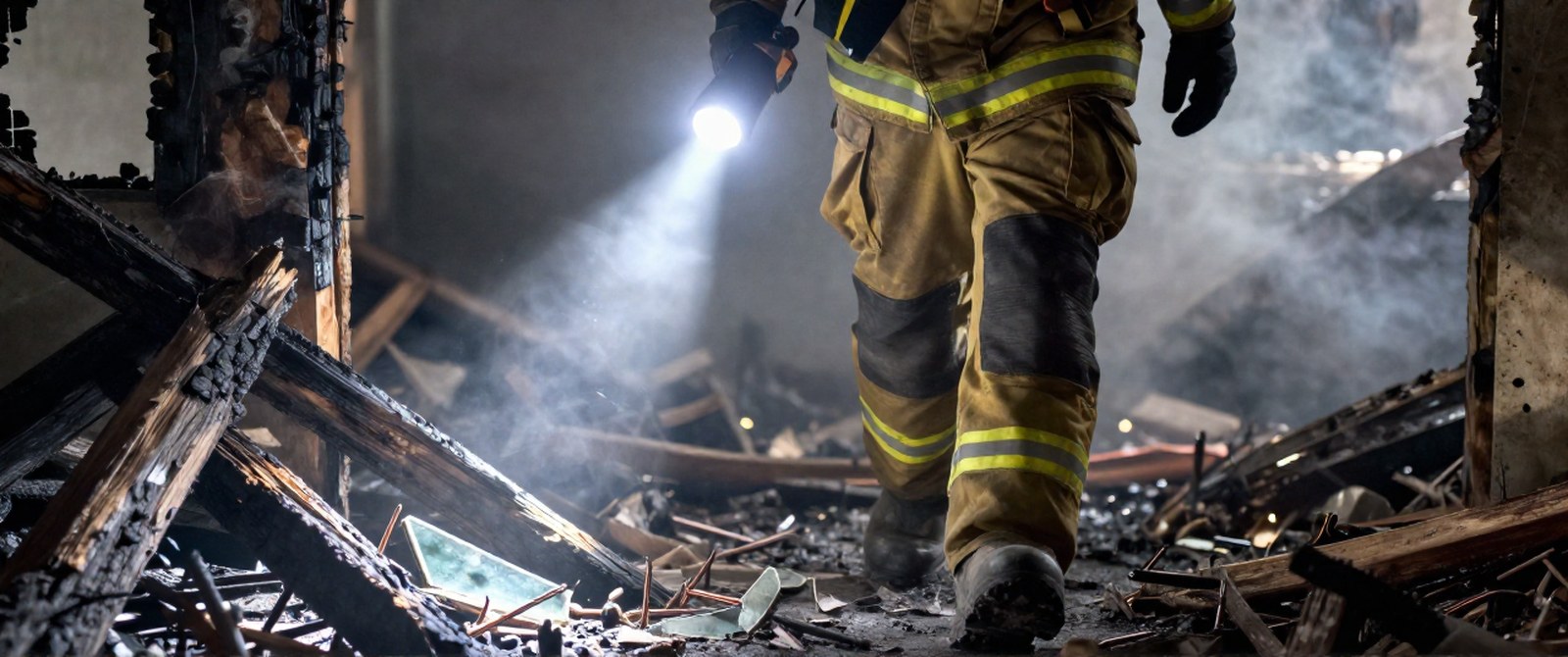
Most of what a boot protects against does not happen during the attack. It happens during overhaul, on a floor of charred timber, roofing nails, broken glass and collapsed fittings, in poor light, when everyone is tired. The puncture-resistant device in the insole and the puncture number for the upper are two separate protections, and both matter, because a nail through the sole and a shard through the side of the foot are different injuries.
The electrical insulation requirement belongs to the same part of the job. It is a limit on leakage through an intact boot, not a rating for working on energized equipment, and it is written on the assumption that the boot is in good condition. A cracked upper or a separating sole voids the reasoning behind every figure on this page.
Leather, rubber and the PFAS question
NFPA 1970 treats the textile parts of the boot as recognized components that have to meet its limits on restricted substances, and that includes total fluorine testing. The textile layers in scope are the exterior fabric layers, the moisture barrier layers and the innermost linings. Laces, labels, zippers, removable insoles, pull straps, thread, elastic and reinforcements are not.
Leather is excluded from that testing, because the test methods have not been validated for it, and a proposed amendment to the standard would exclude rubber for the same stated reason. The practical consequence is worth understanding before a supplier answers a PFAS question for you: on a leather or rubber boot, a restricted substances statement describes the textile layers that were tested, and says nothing about the leather or the rubber itself.
Fit is the part nobody certifies for you

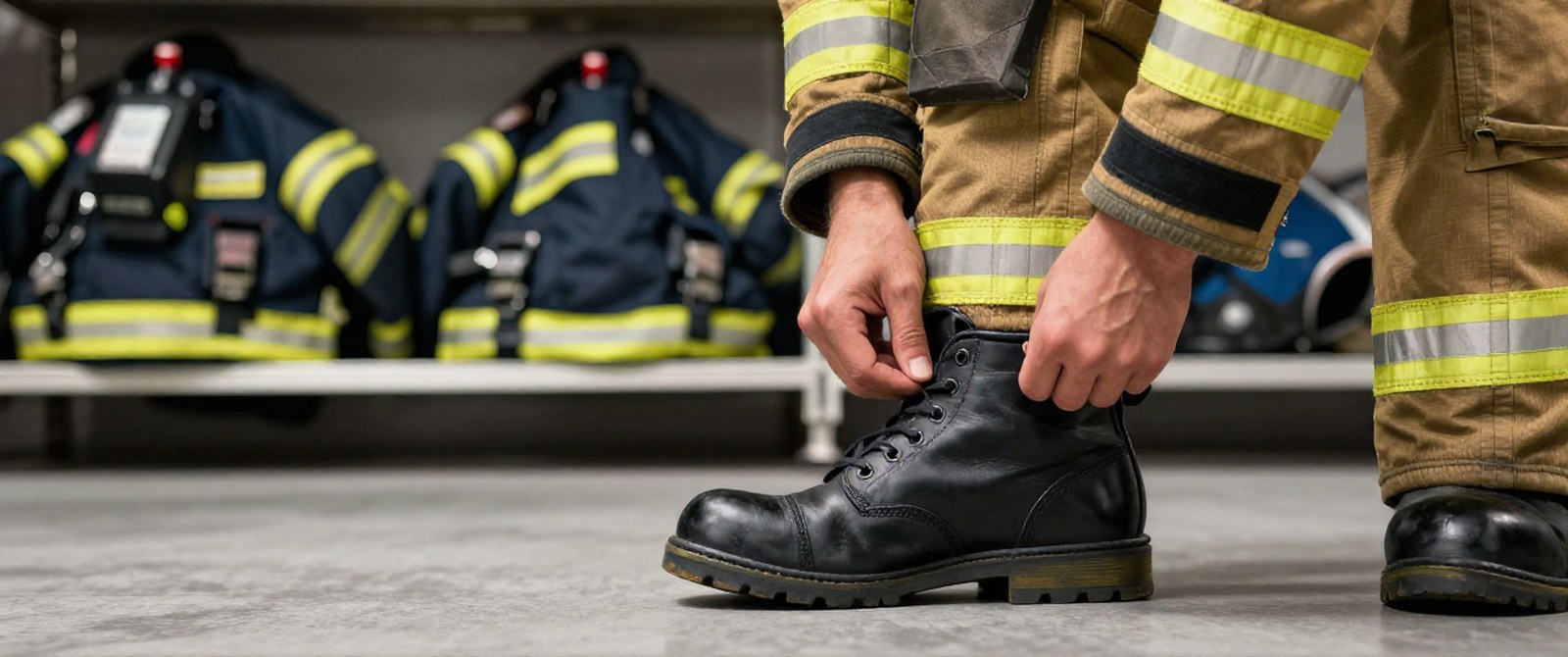
Certification says the boot performs. It does not say it fits the person wearing it, and fit is where foot injuries and refusals to wear actually come from. A boot that is too large lets the heel lift on every rung, which is how members end up climbing on their arches. A boot that is too tight loses the insulating air space and gets cold and hot faster than it should.
Try boots the way they will be worn: with station socks, with the pant dropped over them, after standing for a while rather than in the first thirty seconds. Ask what sizes and widths a model actually ships in, including women’s lasts rather than small men’s sizes, and get both constructions in front of members before the order rather than after it.
Care, inspection and the ten-year clock
Selection, care, maintenance and retirement for the whole ensemble, footwear included, sit in NFPA 1850, which consolidated the older care and maintenance standards. The retirement rule is the one to put in a budget: structural ensemble elements are retired no more than ten years from the date of manufacture, and that clock starts at manufacture, not at issue. Boots bought as stock and shelved for two years arrive with two years already spent.
Between issue and retirement, the failures to look for are mechanical and visible: sole separation at the welt, cracking across the flex point of the upper, a worn tread that no longer meets the traction the boot was certified with, damaged linings, and a shank that has started to soften. Commentary on the consolidated standard describes an updated test program aimed squarely at those failures, with flex testing meant to simulate repeated kneeling and stair climbing and longer heat exposure cycles. High call volume departments see all of it sooner.
Clean contaminated boots rather than letting them dry dirty, dry them without direct heat, and record the date of manufacture somewhere other than the boot itself, because the label is the first thing that becomes unreadable.
Questions worth asking a supplier
- Which standard and edition is this model certified to, and may we see the label and the certification listing?
- How is the ladder shank built, how far back does it run, and what deflection does the certified model record?
- Is the toe cap steel or composite, and what does that change for weight and for cold?
- Which sizes and widths does this model ship in, and are there women’s lasts rather than scaled down men’s sizes?
- If the boot carries a restricted substances or fluorine statement, which layers were tested and which were excluded?
- Where is the date of manufacture, and how old is the stock you would ship us?
- What does resoling or repair look like, who is authorized to do it, and does it keep the certification intact?
This page describes structural footwear in general terms and names no manufacturer. Constructions, lasts, shanks and test values vary between makers and between models from the same maker, so ask any supplier for the figures on the certified product you would actually buy.
A boot is certified as a finished product, and it still has to work with the pant cuff that drops over it. See protective apparel for how the ensemble is certified as a system.
Related
Coat & Pant
The garment whose cuff drops over the boot, its three certified layers, and what NFPA 1970 requires of the ensemble as a whole.
Risk Assessment
Work through foot protection alongside the rest of the ensemble and finish with a written record of what your department decided and why.
General information for fire service decision makers, not a specification and not compliance advice. It names no manufacturer and endorses no product. NFPA and the standards referenced here are the property of the National Fire Protection Association; FireBrigade.com is not affiliated with, endorsed by, or speaking for NFPA.
 Advertisement