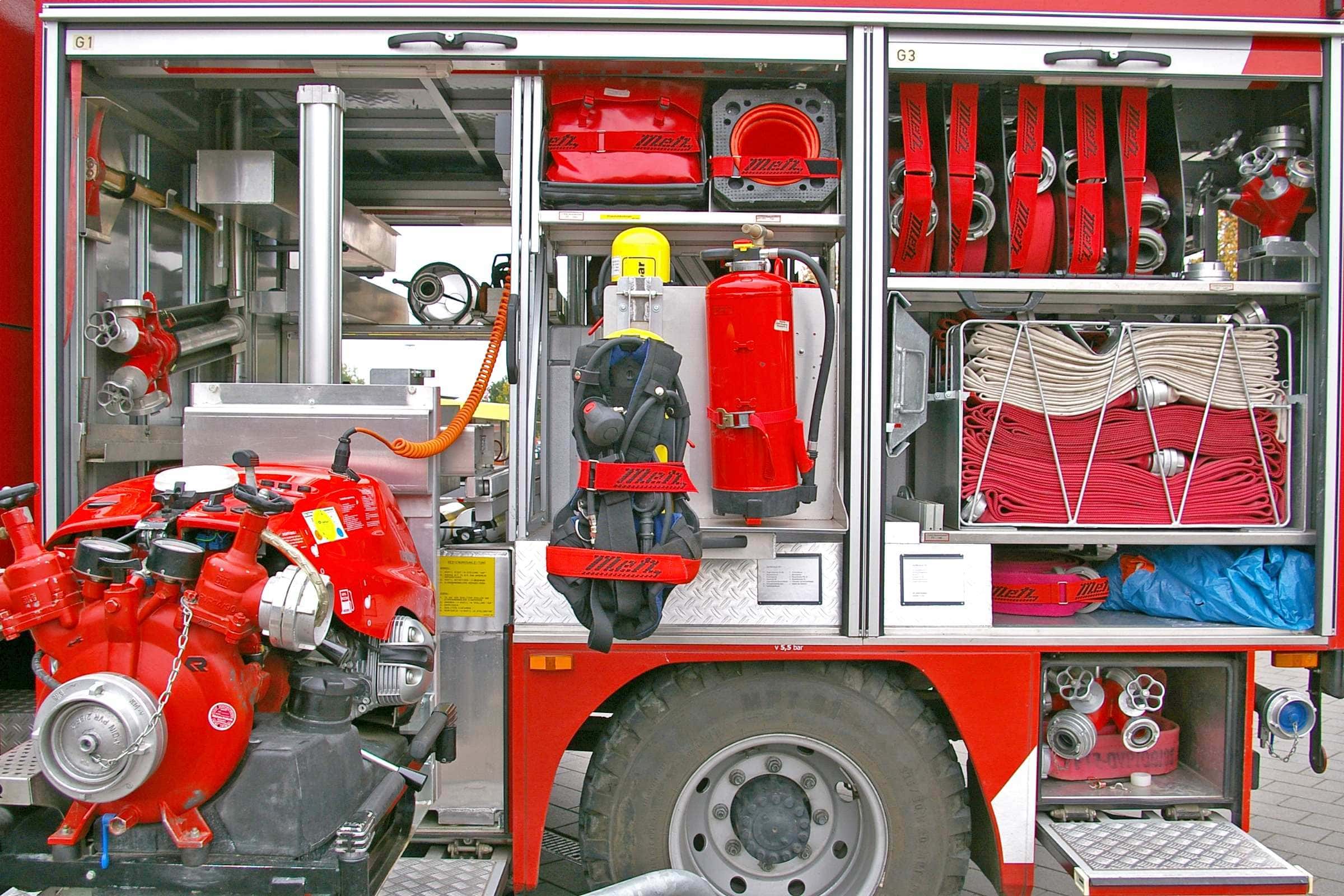
Protective equipment is expensive, and most departments buy it with budgeted funds. Revenues are stretched thin and that’s where grants and funding opportunities can help. Federal programs are the largest single source, but they are not the only one, and they are not always the right one for what you need. This page maps the routes.
Read the dates here as history, not as a calendar. Application windows, award ceilings, match requirements and eligibility rules change every cycle, and several of the programs below were between windows when this page was written. Use it to work out which programs fit your department, then go to the program’s own site for what is open today. Every entry links to its source.
FEMA: the federal fire grants
FEMA runs three separate programs for the fire service under the Assistance to Firefighters Grant Program umbrella. They open on the same schedule but fund different things, and applying to the wrong one costs you a year.
AFG – Assistance to Firefighters Grants
The equipment program, running since 2001. AFG funds the critically needed resources a department needs to protect its members and the public protective clothing, apparatus, breathing apparatus, communications equipment, wellness and fitness provision, and training. If you are replacing turnout gear or SCBA, this is the federal program you are aiming at.
SAFER – Staffing for Adequate Fire and Emergency Response
The people program, not the equipment one. SAFER funds increases in staffing capacity: hiring firefighters, and recruiting and retaining volunteers. Volunteer firefighter interest organizations can apply directly alongside departments, which matters for state and regional associations running recruitment campaigns on behalf of their members.
FP&S – Fire Prevention and Safety
Projects that reduce fire risk to the public and to firefighters prevention and public education activity, code enforcement work, smoke alarm programs, and firefighter safety research. It is the route for a project rather than a purchase.
All three are applied for through FEMA GO, FEMA’s grants platform, and all three require recipients to file a performance report every six months once awarded. FEMA runs a help desk on 866-274-0960 and answers questions at firegrants@fema.dhs.gov, and each FEMA region has fire program specialists who take program questions directly.
Status as of August 2026: the FY 2025 application period for all three programs opened on May 19, 2026 and closed on June 22, 2026. Watch FEMA’s page for the next announcement rather than assuming the same dates recur.
FEMA Assistance to Firefighters Grants
Federal money that reaches you through your state
Not all federal funding is applied for federally. Volunteer Fire Assistance is congressionally appropriated through the USDA Forest Service, passed to state forestry agencies, and distributed by them to rural departments. You apply to your state, not to Washington.
VFA is wildland-focused: equipment for wildland firefighting, organizing rural departments for wildland response, training, and prevention activity typically on a 50/50 cost-share basis, so the department funds half. Because each state administers its own version, the terms differ sharply. South Carolina limits eligibility to departments serving 10,000 people or fewer and awards up to about $5,000; New Mexico allows up to $25,000 per qualifying department per year. Those are illustrations of the spread, not the program’s national terms find out what your own state forestry agency offers.
State and local sources
State-level money is smaller than AFG but the competition is smaller too, and the applications are usually shorter. Three places to look:
- Your state fire marshal’s office. Many run equipment grant programs aimed squarely at what this site is about. Ohio’s Fire Department Equipment Grant, for example, funds protective clothing and SCBA for qualifying departments. Programs, ceilings and cycles vary by state, and some states run loan programs alongside the grants.
- Your state forestry agency, for the VFA money described above and for any state wildland programs running alongside it.
- County and municipal sources, including regional councils of government, community foundations, and local utility or banking programs that fund public safety in their service area. These are rarely advertised nationally and are often the least contested money available to you.
Foundations and corporate programs
Private funding does not replace a federal award, but it moves faster, asks for far less paperwork, and is well suited to a single piece of equipment rather than a whole program.
Firehouse Subs Public Safety Foundation
One of the largest private funders of first responder equipment in the country, having granted more than $107 million since it began. It is open to fire departments, law enforcement, EMS, other public safety organizations, non-profits and schools. The equipment it funds most often gives a fair sense of the scale it works at: automated external defibrillators around $1,500, bunker gear around $2,000, thermal imaging cameras around $10,000, and vehicle extrication tools. Applications run in defined periods through the Foundation’s own grants portal.
Firehouse Subs Public Safety Foundation grants
State Farm and the NVFC – Good Neighbor Firefighter Safety Program
A program aimed specifically at small volunteer departments, run with the National Volunteer Fire Council. In 2026 State Farm committed $1.5 million, awarding $10,000 to each of 150 volunteer departments. Eligibility is tightly drawn: the department must serve a population of 25,000 or fewer. The selection deliberately spreads nationally: at least one recipient is chosen from every state that produces ten or more eligible applications, so a department in a state with few applicants has unusually good odds.
Separately, State Farm’s Good Neighbor Citizenship company grants list 501(c)(4) volunteer fire companies among their eligible organizations, so a department that misses the firefighter safety window has a second door.
Status as of August 2026: the 2026 application period has closed.
Good Neighbor Firefighter Safety Program
Gary Sinise Foundation; First Responder Outreach
The most accessible of the four, because it has no window: applications are accepted year round and are considered on a rolling basis. Grants cover equipment and training only construction, utilities, land and operating costs are explicitly excluded and a department may submit one application per calendar year regardless of whether the last one succeeded. Volunteer, low-income and underfunded departments are prioritized. Approved funds are issued by check within four to six weeks, and departments awarded turnout gear are sent “Donated By” patches to add to the coats at no cost.
Gary Sinise Foundation First Responder Support
Leary Firefighters Foundation
Founded in 2000 by Denis Leary after the Worcester warehouse fire that killed six firefighters, including his cousin and a childhood friend. It funds training, equipment and technology for both career and volunteer departments across the United States, with grants in the range of roughly $2,500 to $25,000.
The process has two stages. You submit a brief Letter of Inquiry through the Foundation’s grants portal describing your department and the project. If the Foundation wants to take it further you are invited to complete a full application, and a phone interview with department leadership may form part of it. The cycle runs on the calendar year, with the completed-application deadline for invited applicants in mid-October. Questions go to grants@learyfirefighters.org.
Leary Firefighters Foundation: apply
For the building, not the gear
Worth separating out, because departments waste applications on this every year. Lowe’s Hometowns awards around $10 million annually, and first responder facilities are explicitly in scope it has funded fire station interior remodels, replacing failing infrastructure and adding private bedrooms and bathrooms. What it does not fund is equipment. If you need turnout gear, this is not the program; if you need to make the station habitable, it may be the best one on this page.
Applications open in an annual window, historically in the early part of the year.
Finding and tracking opportunities
The programs above are the ones that are easy to name. Funding moves constantly at the federal, state and local level, and a department with nobody watching for it usually hears about a window after it has closed. Two commercial platforms are worth knowing about; both are subscription tools built for organizations that pursue government money regularly, and each answers a different question.
HigherGov
A federal market intelligence platform whose grant side is the part that matters to a fire department. It consolidates federal grant opportunities into one searchable place, so AFG, SAFER, FP&S and the smaller programs you would otherwise have to check portal by portal all appear together, and a saved search can alert you when something new matches instead of leaving you to remember to look. Behind the open opportunities sits the history: more than ten million grant awards going back to 2000, including subgrants that are difficult to trace anywhere else, over 200,000 award recipients with their funding history and partners, roughly 6,000 grant programs, and the agencies and grant officers behind them. Most useful of all for a first application is the document archive tens of thousands of past grant application documents dating back to 2007, which lets you read how departments comparable to yours made their case and what they were awarded for it. State and local opportunities are covered alongside the federal ones.
HigherGov for grant recipients
GovSpend
Not a grant tracker, and worth being clear about that: GovSpend is procurement intelligence, built on what government agencies have actually bought. Its value to a department is in the part of an application that is hardest to defend the number. It holds historical purchase orders from state, local and school district agencies with the pricing, quantities and suppliers attached, so you can see what comparable departments paid for the same apparatus, turnout gear or thermal imaging camera and put a figure in a budget narrative that is supported by more than one vendor’s quote. The same records show which agencies bought what and who signed for it, which is how piggyback opportunities get found, and the platform also carries agencies’ own past RFPs useful when you have to write one and want to be certain you have not left out delivery, installation, training or removal of the old equipment. A companion platform, Fedmine, covers federal contract data.
GovSpend for state and local agencies
Neither is necessary to win a grant. Every program on this page can be found and applied for directly, and most departments do exactly that. What a tracking service buys you is earlier notice of an open window and numbers you can defend, which is worth weighing against the cost if grant funding is a standing part of how your department is equipped rather than an occasional effort.
What a strong application shows
Every program on this page is competitive, and the ones that award the most money ask the hardest questions. What separates a funded application from a declined one is almost always evidence: not that the department wants the equipment, but that a documented hazard creates a specific, measurable shortfall that the equipment closes.
A completed risk assessment is one of the strongest pieces of evidence an application can carry, because it documents the hazards your members actually face and the equipment gaps that follow from them. Ours is free to use and produces a written record you can attach.
Structural PPE Risk Assessment
A guided assessment that documents the hazards your department faces and the protective equipment they call for. Free, and the output is written up so it can go straight into a funding application.
Cooperative purchasing is worth understanding alongside the grant itself: several of these programs expect the purchase to follow a competitive procurement process, and buying from an existing cooperative contract can satisfy that. See Purchasing Agreements.
General information for fire service decision makers, not grant-writing or legal advice, and not an endorsement of any program or funder. Award amounts, eligibility criteria, cost-share requirements and application windows change from cycle to cycle, so confirm everything against the program’s own published guidance before you rely on it. FireBrigade.com is not affiliated with FEMA, the USDA Forest Service, or any of the foundations or companies named here.